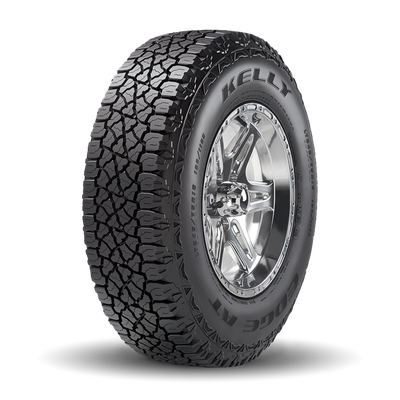
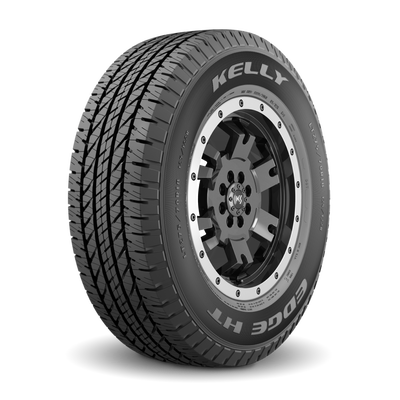
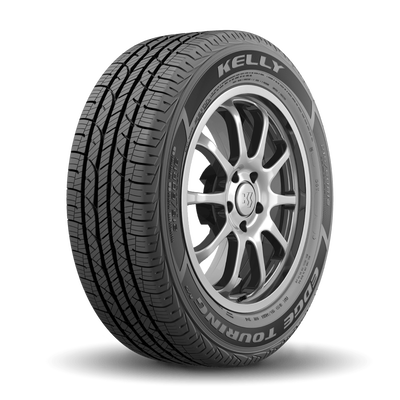
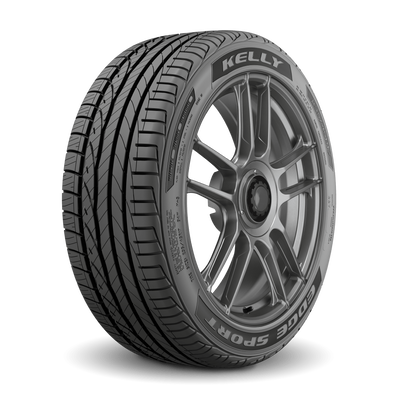
Kelly Tires
A Good Deal
On A Great Tire™
 GO 

A GOOD
DEAL ON A
GREAT TIRE


      Select type of tire
      
 
      GO
Auto & Light Truck

Tire School

Terminology | Basic Training | Safe Passage | Staying in Shape


Tire Components

Belts — One or more rubber-coated plies (layers) of steel, polyester, nylon or other material that's under the tread and runs circumferentially around the tire. Belts reinforce body plies and helps hold the tread securely on the road. Belts help reduce squirm for great treadwear, and help resist impact and puncture damage.

Carcass (Casing) — The main body of the tire consisting of wire beads and body plies, but not including the tread or sidewall rubber.

Inner Liner — A layer of specially compounded rubber forming the inside of a tubeless tire. It helps prevent air pressure loss.

Plus Sizing — It's one of the simplest ways for you to dramatically improve both the look and performance of your vehicle. The concept is to alter the wheel diameter and the tire aspect ratio. There are three common categories of Plus Sizing: Plus Zero, Plus One and Plus Two. See your Dealer for more details.

Ply — One or two layers of rubber-coated fabric used to form the body of the tire. Auto and light truck tire plies are typically constructed of nylon or polyester cords.

Tire Cutaway
Radial Tire — A tire in which the cords of the body plies extend from bead to bead at an angle of 90 degrees to the circumferential centerline of the tire. This kind of tire also has two belts running circumferentially around the tire, immediately under the tread.

Tread — The portion of the tire which comes in contact with the road.

Tread Groove — The pattern of grooves and tread elements.


Tread Design — The Pattern of Grooves and Tread Elements

Asymmetrical Tread Design — Non-symmetrical design. The design of the tread pattern changes from one side of the tread face to the other, in order to have two or more different types of tread patterns on one tire for better overall performance.

Directional Tread Design — A tire that rotates only in one direction for maximum performance, especially on wet roads.

Mud & Snow Tread Design — A tire with a heavy bar or block tread element design to help provide traction in mud or snow conditions. The tire will be marked M+S on the sidewall.

Non-Directional Tread Design — A tire that rotates in either direction without loss in performance.


Other Common Terms

Aspect RatioAspect Ratio — A numerical term which expresses the relationship between the section height of the tire and the cross section width. The lower the aspect ratio, the wider the tread and the shorter the sidewall.

Hydroplaning — Associated with driving on rain-slicked roads with worn tires. It is the lifting action on a tire when water pressure forces the tire upward, leaving a cushion of water between the tire and road surface.

Load Index — A numerical code associated with the maximum load a tire can carry at the speed indicated by its speed symbol.

Load Range — A term which is gradually replacing the term "Ply Rating" and which is indicated as Standard Load (SL) and Extra Load (XL) for auto tires and Load Range C, D etc. for light truck tires. (The carrying capacity of the tire at specific air inflation pressures.)

PSI — Pounds per square inch - used to measure air pressure in a tire.

Service Description — A mark consisting of the load index and speed symbol, i.e. 87S.

Speed


Speed Rating — A system to establish and label the high-speed capability of a tire based on laboratory testing.

*Kelly-Springfield does not recommend the use of any of its products in excess of legal speed limits.

Tread Depth — A mound of rubber in the tread measured in 32nds of an inch from the tread surface to the bottom of the tread grooves.

Tread Design — The pattern of grooves and tread elements.

Tread Wear Indicator — Narrow bars of rubber molded into the tread at a height of 2/32nds of an inch. When this appears, it is time to replace the tire.

UTQG — Stands for Uniform Tire Quality Grading, a quality rating system developed by the Department of Transportation (DOT). For more information on UTQG continue here.

Wheel Alignment — The measuring, analyzing and setting of angles to predetermined specification to help ensure maximum tire service life, vehicle handling and safety. Proper wheel alignment is attained when each wheel's position, relative to the vehicle and specification, is correct.

Four-Wheel Alignment — Four-wheel alignment is the setting of all four wheels to specifications and referenced to the vehicle centerline.

Two-Wheel Alignment — Two-wheel alignment is normally performed on solid axle rear wheel drive vehicles, and is the setting of the front wheels relative to one another.

Wheel Balancing — Adding external weights to compensate for unequal distribution of tire and wheel weight. Unbalanced tire and wheel assembly is balanced by clamping appropriate metal weight to the rim.

 
How to Read a Sidewall

Auto Tire Size Designation

P195/60R15 87S

  • P = Passenger car tire
  • 195 = Approximate cross section width in millimeters
  • 60 = Aspect ratio (height to width)
  • R = Radial construction
  • 15 = Rim diameter in inches
  • 87 = Load index
  • S = Speed rating symbol (S=max. speed of 112 mph)

Light Truck Size Designation - #1

LT 235/75R15

  • LT = Light truck tire
  • 235 = Approximate cross section width in millimeters
  • 75 = Aspect ratio (height to width)
  • R = Radial construction
  • 15 = Rim diameter in inches

Light Truck Size Designation - #2

31x10.50R15 LT

  • 31 = Approximate diameter in inches
  • 10.50 = Approximate cross section width in inches
  • R = Radial construction
  • 15 = Rim diameter in inches
  • LT = Light truck tire